
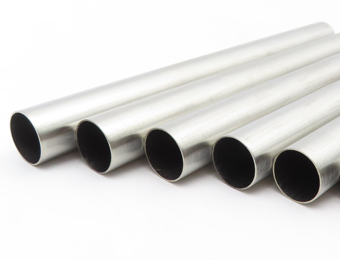
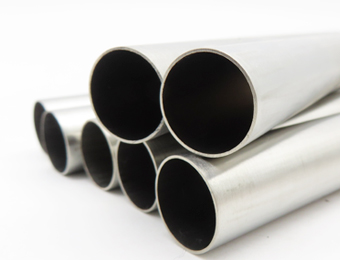
Niobium Tubes are used in high-performance applications in superconductivity, Aerospace, Medical, chemical processing, and energy-related industries. Niobium tubes (also known as Nb tubes, Cb tubes, or columbium tubes) are valued for their excellent corrosion resistance, high melting point, ductility, and specialized superconducting properties at cryogenic temperatures.
These niobium pipes and tubes can be used in selected advanced applications ranging from scientific research and chemical processing to aerospace and specialized medical technologies.
Superconductivity
In superconductivity applications, high-purity niobium is widely used for superconducting radio-frequency (SRF) cavities and other cryogenic research equipment because pure niobium becomes superconducting below its critical temperature of approximately 9.2 K. High-purity niobium with a high Residual Resistivity Ratio (RRR) is particularly important for SRF cavity applications and particle accelerator technology.
NbTi alloy, rather than pure niobium, is more commonly used for superconducting magnet wires and cables, including applications in MRI systems and other superconducting magnet systems. Niobium-based superconducting materials are also relevant to particle accelerators, nuclear magnetic resonance research, and other advanced cryogenic technologies.
Aerospace
The aerospace industry uses niobium and niobium alloys for selected high-temperature applications because of their high melting points, relatively low density, and useful high-temperature mechanical properties. Nb-1Zr and other niobium alloys can be supplied in tube and other product forms for specialized high-temperature applications, depending on the required grade, temperature, environment, and mechanical properties.
Because pure niobium and niobium alloys can oxidize rapidly at elevated temperatures in air, protective coatings, controlled atmospheres, or vacuum conditions may be required for certain high-temperature applications.
Chemical Processing
For chemical processing, niobium tubes and pipes provide excellent corrosion resistance in many aggressive chemical environments. Niobium tubing can be considered for selected applications involving acids and other corrosive media, depending on the chemical concentration, temperature, and operating conditions.
Niobium tubes can be manufactured as seamless or welded products according to applicable specifications such as ASTM B394, with customized dimensions available for specialized chemical-processing applications.
Medical
In the medical field, niobium is recognized for its good biocompatibility and corrosion resistance, making it of interest for selected biomedical and medical-device applications. The specific use of niobium tubing in medical devices depends on the material grade, product specification, manufacturing process, and applicable regulatory requirements.
Niobium is also used in certain jewelry and body-jewelry applications because of its biocompatibility and ability to be anodized to produce a range of colors. These applications are distinct from regulated medical-device applications.
Energy
The energy sector can use niobium and niobium alloys in selected high-temperature, chemical-processing, and specialized energy-related applications. Niobium's corrosion resistance, high melting point, and alloying capability make it suitable for specific demanding environments.
The selection of niobium tubing for energy applications depends on operating temperature, chemical environment, pressure, radiation exposure, and required mechanical properties. Specific applications should therefore be evaluated according to the actual service conditions rather than assuming that all niobium tubes are suitable for nuclear or oil-and-gas service.
Niobium Tube Specifications and Custom Sizes
Fortu Tech supplies niobium tubes and pipes in customized dimensions for specialized applications. Products can be manufactured in seamless or welded forms, with material grades including ASTM B394 R04200 and R04210, as well as selected niobium alloys according to customer requirements.
High-purity niobium tubing is available for specialized applications, with purity, diameter, wall thickness, length, surface condition, tolerance, and other technical requirements customizable according to customer drawings and specifications.
With its combination of corrosion resistance, high melting point, ductility, high-temperature properties, and superconducting behavior at cryogenic temperatures, niobium tubing continues to support specialized applications across scientific research, chemical processing, aerospace, medical, and other advanced industries.
For technical specifications or application consultation, our materials engineering team provides comprehensive support to help select the optimal niobium tube or niobium pipe solution for your specific requirements, whether for large-scale industrial deployment or precision research applications.