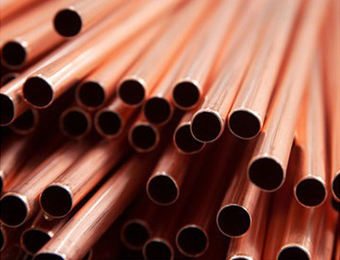
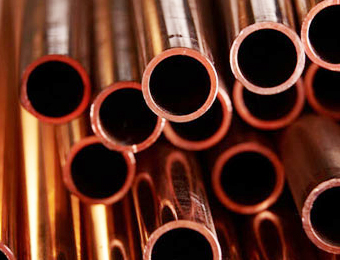
Fortu Tech specializes in manufacturing Copper Nickel Alloys CuNi 90/10 & 70/30 products.
| CuNi 90/10 & 70/30Regular Product | ||
| CuNi 90/10 tube | CuNi 70/30 tube | CuNi 90/10 sheet |
| CuNi 70/30 sheet | CuNi 90/10 rod | CuNi 70/30 rod |
| CuNi 85/15 tube | CuNi 85/15 sheet | CuNi 85/15 rod |
Copper-nickel alloy is a metallic alloy primarily composed of copper and nickel, with nickel content generally below 50%. Copper nickel alloys can form a continuous solid solution. The density is approximately 8.88–8.9 g/cm3. Nickel-riched alloys exhibit a more distinct silvery-white luster.
Copper-nickel alloys are characterized by corrosion resistance, good ductility, and stable electrical resistance properties. They are widely used in superconductivity, marine engineering, shipbuilding, petrochemicals, medical devices, and the manufacturing of electrical instruments and meters.
| Chemical Requirements Copper Nickel Alloys CuNi 90/10 | |||||||
| Element % | Cu | Ni | Fe | Mn | Zn | Pb | Other |
| Content Maximum % | 88.0-90.0 | 9.0-11.0 | 1.0-1.8 | 0.5-1.0 | ≤1.0 | ≤0.05 | ≤0.5 |
| Chemical Requirements Copper Nickel Alloys CuNi 70/30 | |||||||
| Element % | Cu | Ni | Fe | Mn | Zn | Pb | Other |
| Content Maximum % | 65.0-70.0 | 29.0-33.0 | 0.4-0.7 | ≤1.0 | ≤1.0 | ≤0.05 | ≤0.5 |
Copper-nickel alloys offer excellent cold workability, allowing for forming through cold rolling, drawing, and stamping. They also exhibit superior weldability via TIG, MIG, and brazing processes.
Smelting
Qualified raw materials, including copper, nickel, and other elements, are procured and blended in specific proportions. The mixture is then subjected to high-temperature melting, thorough stirring, and casting to form copper-nickel alloy billets.
Refining
The cast billets undergo surface cleaning and degassing treatments to enhance their purity and microstructural homogeneity.
Hot Working
Billets are heated to a suitable deformation temperature and then plastically formed, with or without applied pressure.
Common methods include forging, rolling, and extrusion: forging is suitable for manufacturing large components; rolling is primarily used to produce plates and strips; and extrusion is apt for creating tubes and profiles.
Cold Working
Processes such as cold rolling, cold drawing, or cold heading are employed to further increase the alloy's strength and achieve precise dimensional accuracy.
Machining
For workpieces with complex geometries or high precision requirements, machining methods like milling, turning, and drilling are utilized for finishing.
Surface Treatment
Techniques such as polishing, pickling, or electroplating can be applied to improve the surface quality and enhance the corrosion resistance of the alloy.
Finishing Operations
Final processing steps, including cutting, welding, and drilling, are performed according to the end requirements to produce the finished workpiece.
If you have inquiry or want to discuss your design with us, please write email to us.
We will reply your email within 24 hours.

1. In the Industrial and Power Sector
Within the power industry, copper-nickel alloy tubes and copper-nickel alloy wires are among the ideal materials for manufacturing electrical wires, cables, and busbars. Their stable electrical resistance ensures safe and efficient power transmission. Nickel-copper alloys are used to produce high-demand mechanical components, industrial valves, and pump bodies, especially in environments exposed to corrosive media, where their service life far exceeds that of ordinary steel.
2. In the Shipbuilding Sector
Copper-nickel alloy tubes are widely used in ships for constructing seawater cooling systems, firefighting systems, fuel systems, and hydraulic pipelines. They can withstand long-term erosion and corrosion by seawater, significantly extending the maintenance cycles and service life of vessels. Particularly in the heat exchangers of seawater desalination units, copper-nickel alloy tubes not only guarantee the long-term stable operation of the equipment but also ensure high energy efficiency due to their excellent thermal conductivity, making them core components in sustainable freshwater production.
3. In the Electronics Sector
Copper-nickel alloy sheets are processed into various precision components, such as crystal oscillator element housings, transistor casings, potentiometer sliders, and shielding covers, through stamping, etching, and other techniques. These parts provide mechanical protection and electromagnetic shielding for fragile electronic chips while ensuring stable electrical connections. The material's fatigue resistance and low thermoelectric potential are crucial for maintaining the precision and stability of electronic devices over prolonged use.
4. In the Automotive Industry
Nickel-copper alloys are used to manufacture corrosion-resistant brake lines, oil coolers, and various electrical connectors, enhancing the reliability and safety of automobiles.
5. In the Construction Field
Copper-nickel alloy sheets are processed into high-end architectural decorative panels, door and window hardware, and water pipe systems. Their natural silvery-white luster combines a modern aesthetic with classic elegance, and they maintain their appearance over the long term without frequent maintenance.
Add: 399 Chunhe Road, Baoshan District, Shanghai, China, 200941
Tel: +86 21 56656030
Email: info@fortu-tech.com